
Episode 19: Documentary Filmmaker Jon Scott Bennett After The Release Of The 2nd Episode Of His Docu-Series "The Peekskill Riots"
All Episodes:
The Peekskill Riots Ep. 1:
"The Mighty Oak in the Forest"
The Story of Paul Robeson
The Peekskill Riots Ep. 2:
"The Friendly Town By The River"
The Duality of Peekskill
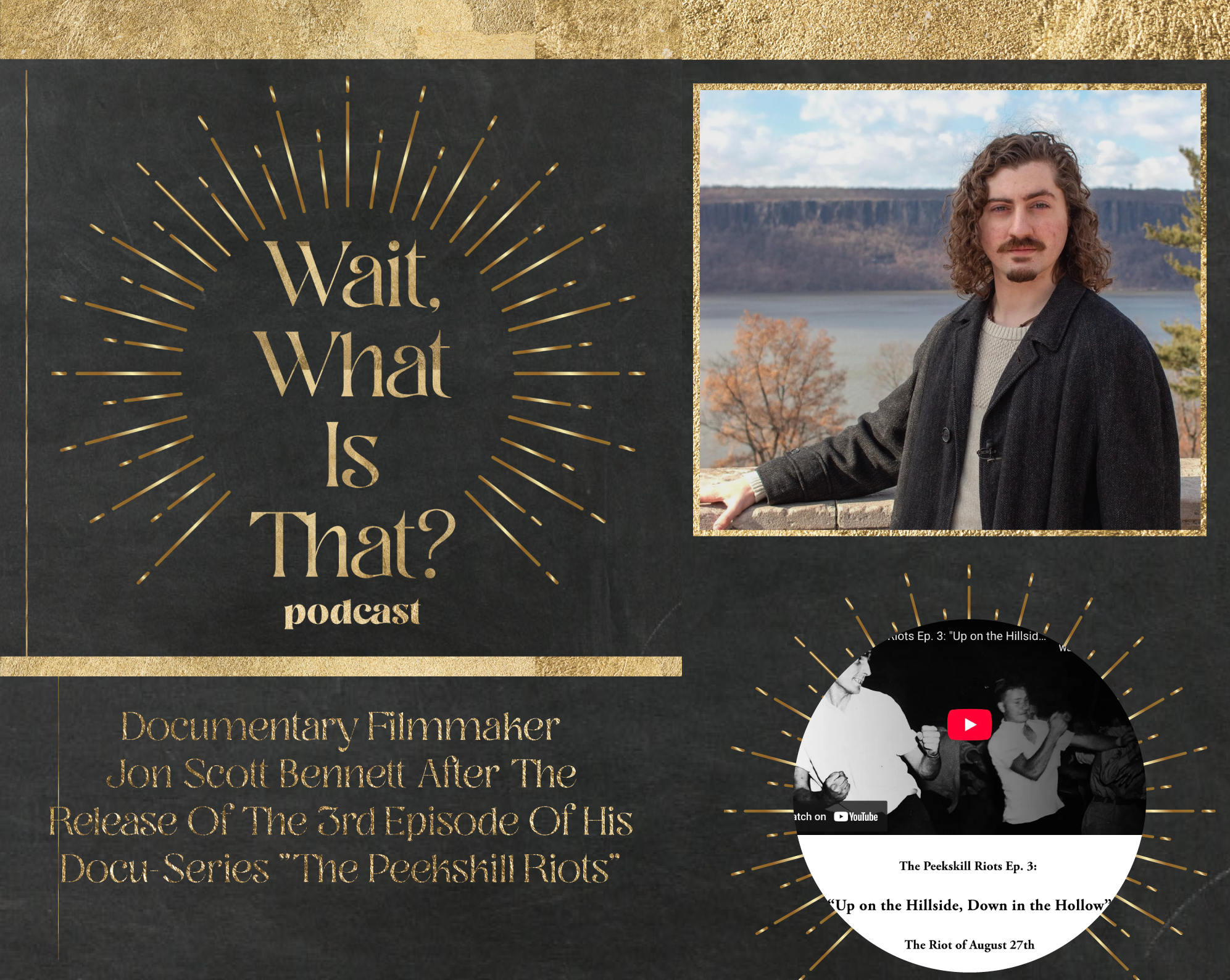
The Peekskill Riots Ep. 3:
“Up on the Hillside, Down in the Hollow”
The Riot of August 27th
The Peekskill Riots Ep. 4:
“A Long Ways From Home”
The Riot of September 4th
The Peekskill Riots Ep. 5:
“Wake Up America”
Before Martin Luther King Jr., there was Paul Robeson, whose voice and accomplishments were executed in erasure while he died a decades slow death after surviving the Peekskill Riots, a violent attack by a white mob on 20,000 Jewish, Black, and white working class concert goers attending Paul's benefit concert for the Civil Congress, at which Pete Seeger was to open for Paul for the second attempt of this concert after the first was assaulted.
We sat down with Peekskill local documentary filmmaker Jon Scott Bennett after his screening of “Up on the Hillside, Down in the Hollow: The Riot of August 27th,”the 2nd episode in his five-part docu-series, The Peekskill Riots at Beacon’s Howland Public Library. Jon gives us an up close and personal view of the making of this episode, which was the first of two violent attacks by white mobs in Peekskill who attended Paul Robeson’s August 27th concert to benefit the Civil Rights Congress and was advertised to the Jewish and Black working-class, summer residents in the Hudson Valley. The Peekskill Evening Star and local veteran's groups - harboring disdain towards the summer residents and Robeson, who was vocal in pro-trade union stance, civil rights activism, Communist affiliations, and anti-colonialism - organized a “protest parade” to stop the concert from taking place which resulted in a horrific riot, in which innocent men, women, and children hoping to attend Paul Robeson's concert were attacked. Rocks, bottles, and other projectiles were thrown, while cars were turned over with passengers inside. An effigy of Paul Robeson was burned as a mock lynching, which was particularly meaningful, since Robeson had advocated unsuccessfully to then President Truman to create legislation to end lynching, to which Truman replied: “"the Negroes will defend themselves."
The Klu Klux Klan (KKK) was openly active in Peekskill then, and and applications for Klan memberships from the Peekskill increased by 748 persons. Robeson was steeped in surviving through racism his entire life, having been born to a father who was born into slavery and had escaped to later become a minister of a Black congregation in Princeton, only to be forced out by white supremacists. Robeson was gifted in athleticism and the arts, having been a star football player for Rutgers (and only Black student), a position for which he physically fought to secure. Later as an attorney, he also left his firm due to racist treatment.
His theatrical success as an American bass-baritone concert artist and actor as a career provided his living and gave him a platform to advocate for a world without racism. He was a fixture in the Harlem Renaissance when he lived in New York, and found a less racially complicated life in London and the Soviet Union. While he disagreed with America’s involvement in World War I using Black bodies to defend a country so abusive of them, he did fall into favor of World War II when Germany invaded the Soviet Union.
Because of his anti-fascist, socials, pro-Soviet views, Paul Robeson was targeted by American lawmakers to silence him especially during the McCarthy era, when he was investigated. Eleanor Roosevelt was also among influential political people who worked to silence him because of his views which were at the time labeled as Communist.
Follow Jon Scott Bennett
Find upcoming events from Jon Scott Bennett here, and see his other films here.